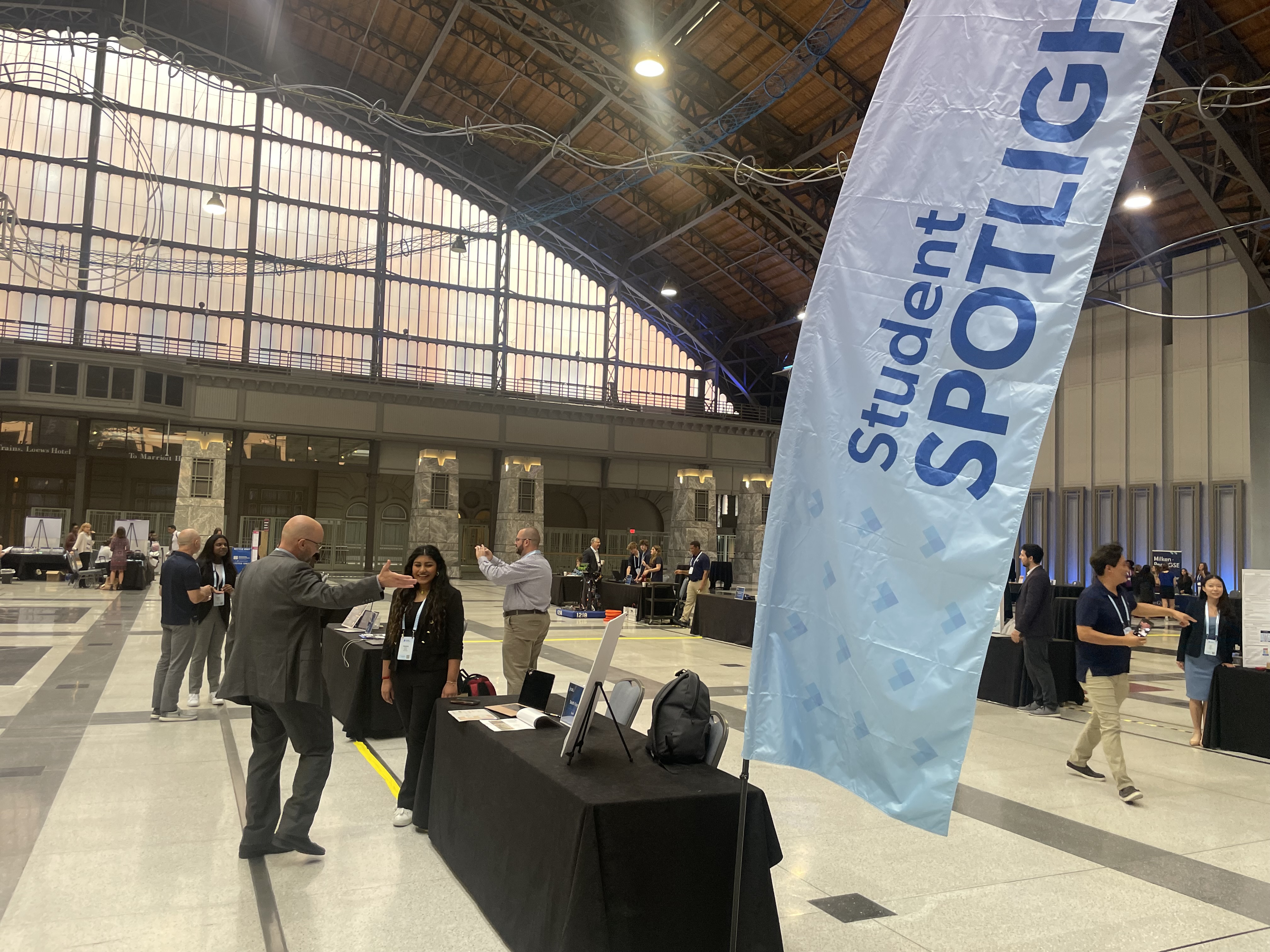
For three days I enjoyed time with colleagues, experts on AI, and students as part of the inaugural Global Impact Forum: AI for Good gathering from September 23-25, 2024 in Philadelphia. As Justin Aglio, the Associate Vice President for Outreach and the Penn State organizer for the event, shared on X: “…we are beyond grateful for the powerful energy, collaboration, and transformative ideas shared over these past few days.”
There were keynotes, sessions, showcases and special events. TGIF brought together a divergent group of people from the educational, human services, governmental, life sciences, robotics, agricultural, and financial sectors. In this report I’m going to focus on a workshop I created with my colleagues, Ed McKaveney, Director of Technology for the Hampton School District, and Rich Platts, Chief Technology Officer for the Allegheny Intermediate Unit. We designed a workshop for educational leaders on AI in Education using the CoSN K-12 Driving Innovation findings from 2024 as our framework. We used AI to generate our prompts and developed an interactive session that allowed participants to reflect on the Hurdles, Accelerators and Tech Enablers in the report based on their experience at the conference. I wanted to highlight the importance of “metacognition,” a human process that AI cannot do.

To engage the participants we decided to use a combination of Design Thinking activities. We used Statement Starters co-created with ChatGPT. As the conference was underway, we listened for emerging themes and modified the prompts adding language that we heard at the conference. In our workshop we divided people into four groups and had each group tackle one of the prompts. Then we tapped into a strategy I had not used before, “World Cafe.” Instead of the entire group rotating to the next prompt this strategy requires one person to remain and update the new group on what the earlier group had discussed. In the past I observed people starting from scratch and not elaborating on previous ideas. With the Global Cafe it was fascinating to see how each group took the original ideas, added details, and then moved onto new ideas. This method resulted in deeper conversations and high engagement among participants.
Here are the results from the discussion after we asked an AI agent to summarize the conversation from the notes that were collected at each table: (Pay special attention to #3. Even though we didn’t directly use this as a prompt, ChatGPT helped us identify common themes that were noticeable across the prompted conversations.)
1. How can the CoSN framework be integrated into a K-12 curriculum?
- Data Ecosystem Evaluation: Incorporate systems for evaluating new technologies and using AI for analyzing contracts and terms of service, enhancing teacher workflows and decision-making.
- Bridging Content and Pedagogy: Use AI tools to critique, evaluate, and review educational content, improving subject domain accuracy in areas like biology and economics.
- Standardized Integration: Develop standardized methods for integrating AI tools into the curriculum to ensure consistency and effectiveness.
- Personalized Tutoring: Implement AI as personalized tutors to cater to individual student needs, enhancing learning outcomes.
- Human Element: Balance AI integration with the human element in teaching, ensuring that technology supports rather than replaces teacher-student interactions.
2. What hurdles at your school/institution does AI enable or accelerate improvement?
- Legal and Privacy Concerns: Address legal challenges and privacy concerns by updating policies and contracts to protect stakeholders.
- Stakeholder Discomfort: Manage discomfort among stakeholders by increasing awareness and access to information about AI benefits.
- Teacher Overwhelm: Use AI to reduce teacher workload, such as grading, to improve retention and focus on teaching.
- Language and Neurodiversity: Leverage AI for translation and support for neurodiverse students, enhancing inclusivity.
- Data Analytics: Utilize data analytics to facilitate learning conversations and inform pedagogical choices.
3. What ethical concerns are you thinking about in your schools/institutions?
- Privacy and Data Security: Ensure robust privacy measures to protect student data.
- Bias and Fairness: Address potential biases in AI algorithms to ensure fair treatment of all students.
- Transparency: Maintain transparency in AI usage and decision-making processes.
- Student Work Authenticity: Redefine what constitutes student work and assessment in the age of AI.
- Teacher Roles: Consider the evolving role of teachers as AI becomes more integrated into education.
4. What are the potential long-term impacts on teachers and students?
- Enhanced Teacher-Student Interaction: AI can free up time for teachers to engage more with students individually.
- Resource Support: AI provides personalized learning resources, supporting student inquiry and a student-centered classroom.
- Professional Development: Continuous professional development for teachers to adapt to AI-enhanced teaching methods.
- Classroom Management: AI impacts classroom management, lesson design, and group work dynamics.
- Critical Thinking: Encourage students to ask better questions and develop critical thinking skills, despite reduced emphasis on traditional research skills.
5. How will you balance the benefits of AI with the need to develop student growth?
- Selective AI Use: Exclude AI from activities like conflict resolution to foster empathy and emotional intelligence.
- Empathy Development: Integrate empathy and emotional intelligence into AI-related activities and prompts.
- Case Studies and Discussions: Use AI to facilitate literature discussions and case studies that promote empathy.
- Teacher Support: AI can help teachers improve their own social-emotional learning (SEL) skills.
- Coaching for SEL: Provide coaching for teachers to enhance their ability to teach SEL effectively.
At the conclusion of the session I asked people for suggestions, Marie Pelloni, Director of Talent Attraction and STEM Development for the Pittsburgh Technology Council, responded, “It was absolutely fantastic. A great balance of providing information, posing thought provoking questions, and then discussion and collaboration.”

Leave a Reply