Over the past ten years, global independent filmmaking has undergone a massive transformation, shifting away from traditional studio gatekeepers toward more decentralized, international production models. Filmmakers around the world have bypassed conventional barriers to entry to tell local stories with universal resonance using actors who look and talk like the members of the audience.. Digital camera equipment and new distribution models have also helped make this happen. This era has redefined art-house and low-budget cinema, proving that regional perspectives—ranging from gritty urban dramas to surreal psychological thrillers—can travel effortlessly across borders and find passionate communities online, at film festivals, and in specialty theaters.
At the heart of this global indie renaissance is a connection with viewers under 35 years old, a demographic that actively seeks out authenticity, stylistic boldness, and emotional transparency over blockbuster formulas. Young audiences turn to short films or full-length feature films that are distributed by companies like A24 and Neon or championed through platforms like MUBI.
A case study: You Can See Everything
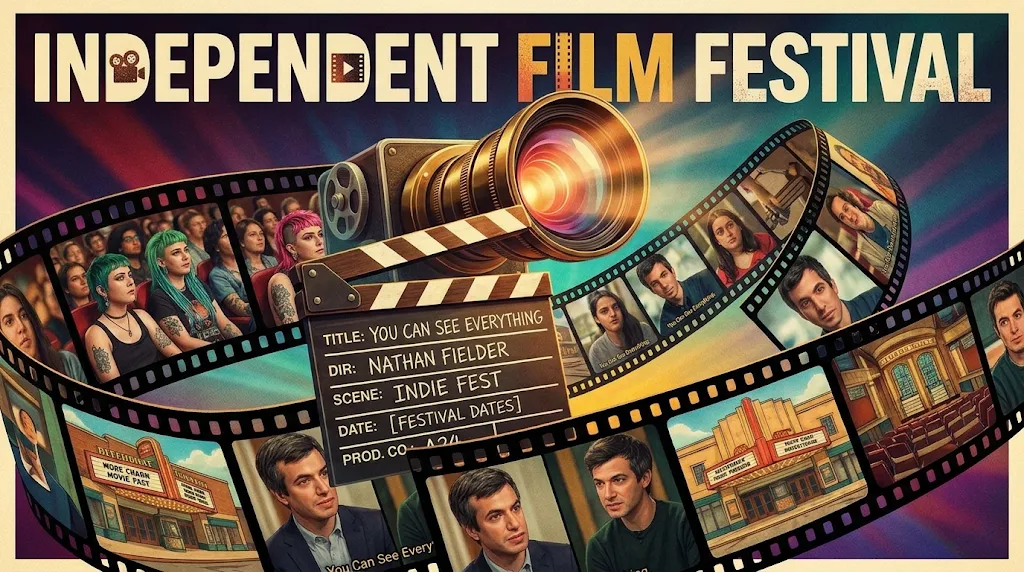
This year You Can See Everything distributed by A24 is a great example of this phenomenon. Within days theaters across the US filled with young faces searching for a sense of their own sense of truth. I had a chance to join the showing of the film in a Pittsburgh movie theatre for a Saturday matinee. Amazingly the show sold out. I searched through the seats and the demographics for a matinee shifted from blue and gray hairs to buzz cuts and tattoos. What did younger viewers see in the movie?
“This was the first movie in my life that wasn’t worse for experiencing it with an audience… The audience laughing in the beginning and how it transitions in the documentary is really something.” (Quote from Lettrboxd)
For a younger audience it’s important to relate to the characters. Even though You Can See Everything was a documentary, Nathan Fielder, the co-director and interviewer, takes on a special role. He becomes a reflection of the writer, searcher, attempting to find the “truth,” but the truth is elusive and difficult to discern.
Shanna Carrick, the Executive Director for Film Pittsburgh, captures the reasons for the film’s success:
“In a world of Marvel movies, the reason why we’re seeing such high box office returns with YOU CAN SEE EVERYTHING may be because it’s the first documentary that is essentially an existing IP. A24 (who has its own fanbase) went into production with a loyal audience of Nathan Fielder fans (THE REHERSAL, NATHAN FOR YOU) and familiarity with Elizabeth Holmes’ case from the narrative fiction series THE DROPOUT, as well as the film THE INVENTOR, and the podcast BAD BLOOD. The “extremely online” crowd was already seated for this meme-able film because they knew what they were getting into with the director.”
The Role of Film Festivals

Paul Sloop, a film festival leader for International Festivals in Cleveland, Pittsburgh, and Cordillera, Nevada, makes a case for the role of film festivals:
So I’ve always thought, and looking at the history over my nearly 30 years of being involved with film festivals, that that just continues to happen. It may look a little different from generation to generation, but at some point, people who love film…eventually, fall upon or discover independent film, and often through film festivals. And their eyes are open to what’s possible through motion picture storytelling. So, I think film festivals really serve that niche in a wonderful way, because with all that content out there, there’s a need for curation. There’s a need for somebody to be the, quote unquote, town crier to say, hear, ye, hear, ye, hear some films that you really need to take a look at.
The Three Rivers International Film Festival has found another connection for young audience members – shorts and horror films. Last year the “Chiller Theater” block of shorts at the Hollywood Row House sold out immediately. The Shorts Festival brings a younger audience to the festival. Short-form content and short films have become a powerful bridge connecting younger generations (Gen Z and Millennials) back to physical cinema spaces and film festivals. Based on a prompt I posted to Google’s AI tool, Gemini, there may be several key behavioral, cultural, and industry shifts explaining why shorts are driving this renewed interest:
1. Alignment with “Bite-Sized” Consumption Habits
Younger audiences have grown up consuming fast-paced, high-impact content on platforms like TikTok, YouTube, and Instagram.
- Pacing and Attention: Short films deliver a complete narrative arc, emotional punch, or high-concept visual idea in a fraction of the time of a traditional feature.
- Low Time Commitment: Going to a 2.5-hour feature film requires a significant block of time and focus. Curated blocks of short films offer a diverse “sampler platter” of genres, styles, and stories in a single sitting, matching the preference for varied, rapid-fire media consumption.
2. Lower Barrier to Entry for Young Creators and Peers
The democratization of filmmaking tools—from high-end smartphone cameras to accessible editing software—means many Gen Z and young millennial creators see themselves reflected both in front of and behind the camera.
- Peer Representation: When young people see shorts made by filmmakers their own age tackling contemporary, highly relatable topics (identity, mental health, digital culture, and social issues), they are far more likely to support those screenings.
- Community and Nightlife: Film festivals and indie short-film clubs often market themselves as vibrant, social community events rather than stuffy, formal galas. Q&As, interactive filmmaker panels, and after-parties turn screenings into social hubs.
3. High-Concept Experimentation and Genre Diversity
Unlike big-budget Hollywood features that often rely on safe, recycled intellectual property (IP), short films are inherently experimental.
- Boundless Creativity: Creators use shorts to take big artistic risks, blending animation, live-action, sci-fi, horror, and meme-culture sensibilities.
- Quick Thrills: For audiences seeking unique tones or niche aesthetics that major studios rarely greenlight, indie shorts provide a concentrated burst of creative originality.
Final Thoughts
Rather than relying on traditional marketing, today’s generation of filmmakers builds grassroots hype through TikTok, Letterboxd, and specialized internet subcultures, transforming independent cinema into a participatory social experience. By tapping into a young audience’s interests, time span for consuming media, and the social interaction of the platforms, independent films, especially shorts, are bringing a younger audience to the world of film.



Leave a Reply